

Table of Contents
- What Commercial Grade Fitness Equipment Durability Actually Means
- Why the Commercial vs Residential Fitness Equipment Label Matters
- Commercial vs Residential Fitness Equipment: Where the Durability Gap Shows Up
- How Long Commercial Gym Equipment Lasts by Equipment Type
- Materials and Construction That Decide Equipment Durability
- Usage Frequency, High-Traffic Facilities, and Wear and Tear
- Your Commercial Gym Equipment Maintenance Checklist
- Gym Equipment Installation Services Near Me: Getting Setup Right
- Total Cost of Ownership: Durability as a Long-Term Investment
- Frequently Asked Questions
Last Updated: October 9, 2026
What Commercial Grade Fitness Equipment Durability Actually Means
Commercial grade fitness equipment durability is a machine's ability to hold its structural integrity, performance, and safety under repeated use in a shared facility.
The practical question is not "will it break?" Every machine eventually wears. The question is how long it stays safe, how much downtime it causes, and whether parts can be sourced years later.
Why the Commercial vs Residential Fitness Equipment Label Matters
The commercial vs residential fitness equipment distinction is a warranty, duty-cycle, and serviceability difference, not a marketing label. Residential machines are built for a few users a few times a week; commercial machines for continuous, rotating use by dozens of people a day.
That is why a residential treadmill may carry a parts warranty measured in a couple of years while a commercial unit is designed around a serviceable motor, deck, and belt assembly, and why two identical-looking machines behave completely differently after 18 months of member traffic.
Commercial vs Residential Fitness Equipment: Where the Durability Gap Shows Up
The durability gap concentrates in six places. Check these before you compare price tags:
Component |
Residential Build |
Commercial Build |
|---|---|---|
Frame steel |
Lighter gauge tube |
Thicker, reinforced steel |
Drive system |
Light-duty motor |
Continuous-duty AC motor |
Cables |
Coated consumer cable |
Industrial cable systems |
Upholstery |
Single-stitch vinyl |
Double-stitched commercial fabric |
Weight capacity |
Lower rated load |
Higher rated load |
Serviceability |
Sealed assemblies |
Replaceable parts |
A residential unit can be perfectly good equipment. It is simply built for a different job. Facility managers who treat the label as a suggestion end up replacing equipment on a short cycle instead of a decade-long one.
How Long Commercial Gym Equipment Lasts by Equipment Type
Expected equipment lifespan varies far more by type and component than by brand. Cardio machines wear fastest because they have motors, belts, and decks; strength equipment lasts longest because it has fewer moving parts and a heavier frame; functional training equipment sits in between.
Treat any single lifespan number with suspicion. The ranges below assume a busy commercial setting, roughly 12 to 16 hours of daily access, dozens of distinct users per machine, and a preventive maintenance program that is actually followed.
Equipment / Component |
Typical Commercial Service Life |
What Drives the Range |
|---|---|---|
Treadmill drive motor |
7-10 years |
Continuous-duty rating, cooling, dust exposure |
Treadmill belt and deck |
1-3 years |
User weight, incline use, lubrication schedule |
Treadmill console and electronics |
5-8 years |
Humidity, cleaning chemicals, power quality |
Upright and recumbent bikes |
8-12 years |
Flywheel bearings, seat adjustment wear |
Ellipticals |
6-10 years |
Pivot bearings, linkage bushings, pedal arms |
Rowers |
5-8 years |
Chain or belt wear, damper mechanism, seat rollers |
Power racks and rigs |
12-20 years |
Steel gauge, weld quality, floor anchoring |
Plate-loaded machines |
10-15 years |
Frame flex, pivot bushings, weight horns |
Cable and pulley stations |
5-10 years |
Cable rating, pulley bearings, guide rods |
Benches |
8-12 years |
Frame gauge, pad foam density, upholstery stitching |
Upholstery and pads |
2-5 years |
Cleaning chemicals, sweat, stitching quality |
Cables |
1-3 years |
Load cycles, pulley alignment, lubrication |
Bearings and bushings |
2-5 years |
Sealed vs. open design, dust, load |
A few patterns sit behind those numbers.
Cardio Equipment: Treadmills and the Parts That Fail First
On a treadmill, the belt, deck, and drive motor fail first, followed by the console and incline mechanism. A commercial treadmill built around a continuous-duty motor and a spacious running surface handles that load far better than a light-duty unit.

VELTRIX Commercial Treadmill | Anatomy Fitness
For a facility, the practical move is to buy cardio equipment with serviceable, replaceable wear parts. The VELTRIX Commercial Treadmill from Anatomy Fitness is a good example: a 4.5 HP continuous AC motor, a 23.62" × 64.17" running surface, and a 400 lb user capacity, all aimed at repeated commercial use.
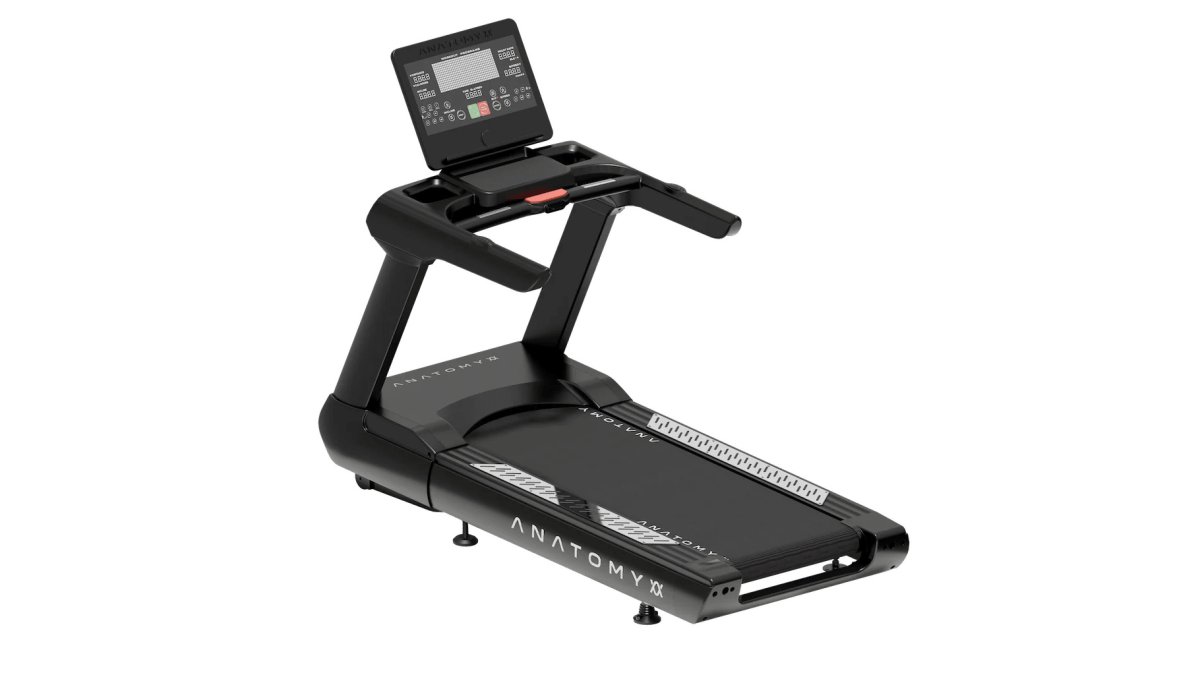
VELTRIX Commercial Treadmill | Anatomy Fitness
Strength Equipment: Reinforced Frames and Cable Systems
Strength equipment lives or dies on frame strength and cable condition. Reinforced frames hold alignment under heavy loads, and industrial cables resist the fraying and stretch consumer cables develop. Welded joints, thick uprights, and quality pulley systems separate equipment that lasts a decade from equipment that loosens in a year.
The York Barbell STS Commercial Power Rack shows what to look for: commercial-grade steel construction, 19 adjustment positions at 3-inch increments, and scuff-resistant weight storage pegs. Plate-loaded machines follow the same logic, which is why a unit like the Defiant Strength DS919 Linear Leg Press is rated for a working load over 3,200 lbs.


Materials and Construction That Decide Equipment Durability
Build quality comes down to four material decisions: steel gauge and frame design, cable and pulley construction, bearing and bushing quality, and upholstery. Thicker steel frames resist flex, and flex is what kills alignment.
Flooring belongs in this conversation too. A dense vulcanized rubber surface absorbs impact and protects both the equipment and the subfloor. The Ecore Beast 10.5mm Vulcanized Rubber Gym Flooring is built for free-weight areas with 72.2% energy restitution and a multi-layer construction designed for heavy strength training.
Usage Frequency, High-Traffic Facilities, and Wear and Tear
Usage frequency is the single biggest multiplier on wear and tear. Weekly repetitions, peak-hour density, and how many different users touch a machine each day all shorten service life. High-traffic facilities consume equipment faster than a corporate wellness room used at lunch.
A useful planning method is to estimate daily user touches per machine, then match the build grade to that number:
- Under 50 touches per day: light commercial or high-end residential build can hold up.
- 50-150 touches per day: full commercial build, with a documented preventive maintenance schedule.
- Over 150 touches per day: full commercial build plus a spare-parts inventory and a service contract, because wear parts will cycle faster than the calendar suggests.
Underestimating this number is the most common reason a facility replaces equipment sooner than planned, and why two facilities with identical machines can see very different lifespans.
VELTRIX Commercial Treadmill | Anatomy Fitness →
Environmental and Operational Factors That Shorten Equipment Life
Environmental and operational factors matter more than most buyers expect. Humidity, temperature swings, dust, cleaning chemicals, and poor user technique all accelerate component failure, which is why placement and signage are durability decisions, not just design ones.
- Humidity and moisture. In unconditioned or poorly ventilated spaces, moisture attacks steel frames, fasteners, and electronics. Surface rust on uprights and corrosion on console boards are early warnings. Dehumidification and airflow are durability investments.
- Temperature swings. Repeated expansion and contraction works on welds, bushings, and belt tension. A space that swings between a cold overnight and a warm peak hour stresses machines differently than a stable one.
- Dust and airborne particles. Dust settles into guide rods, bearings, and motor cooling paths. In spaces near loading docks, turf areas, or outdoor entries, dust ingress accelerates wear on cables and pivot points.
Turning This Into a Plan
Walk the floor and note, per machine: daily touches, hours of exposure, proximity to moisture or dust sources, and how often it is cleaned. Machines that score high on all four need a shorter service interval and replacement horizon; low scorers can run a standard schedule. Revisit the assessment when you change hours, add programming, or renovate, durability is a moving target, not a one-time spec.
Your Commercial Gym Equipment Maintenance Checklist
A commercial gym equipment maintenance checklist turns durability from a hope into a schedule. Preventive maintenance catches wear before it becomes component failure and is far cheaper than emergency replacement.
Daily
- Wipe down upholstery, handles, and consoles
- Inspect cables and belts for fraying or slack
- Check that all adjustment pins and locks engage
Weekly
- Tighten frame bolts and fasteners on high-use machines
- Test treadmill belt tension and tracking
- Lubricate cables, guide rods, and pivot points
Monthly
- Inspect pulley systems and bearings for noise or play
- Check deck wear and running belt condition
- Review weight stack and pin condition
Quarterly
- Full torque check on structural fasteners
- Motor and drive inspection on cardio units
- Replace worn grips, pads, and cables
Keep a log per machine. Service intervals should shorten as facility usage rises, not stay fixed.
Gym Equipment Installation Services Near Me: Getting Setup Right
Searching for gym equipment installation services near me usually means one thing: the buyer wants the machine assembled correctly the first time. Correct installation protects structural integrity and warranty coverage.
Revive and Lift offers nationwide white glove delivery and assembly, so equipment arrives and gets set up by people who do it regularly rather than by whoever is free that afternoon.
Total Cost of Ownership: Durability as a Long-Term Investment
Total cost of ownership is where durability pays off. Purchase price is only the first line.
Return on investment in fitness equipment comes from uptime.
Durability is not a spec you read off a label. It is the result of build quality, correct installation, and a maintenance schedule you actually follow, the whole equation, and the one most facilities skip.
Frequently Asked Questions
What makes fitness equipment 'commercial grade'?
Commercial grade fitness equipment is built for repeated use in high-traffic facilities rather than occasional home workouts. The differences show up in reinforced frames made from thicker steel, industrial cables and cable systems rated for far more cycles, higher weight capacity, and components designed for easy service and replacement. A commercial treadmill like the VELTRIX from Anatomy Fitness, for example, uses a 4.5 HP continuous AC motor and a 400 lb user capacity, specs you rarely see on residential machines. Those choices are what extend equipment lifespan under constant use.
How long should commercial gym equipment last?
Most commercial cardio equipment reaches roughly 7 to 10 years of service life, while strength equipment with reinforced frames often lasts 15 years or more. Actual lifespan depends on usage frequency, maintenance, and environmental factors. A treadmill running 10 hours a day in a busy facility will wear faster than one used a few hours daily. Following a preventive maintenance schedule, replacing worn cables and belts on time, and keeping equipment in a climate-controlled space are the biggest levers for hitting the upper end of those ranges.
Is commercial grade equipment worth the investment for home gyms?
For serious home gym builders, commercial grade equipment often makes sense because the durability translates into fewer replacements and better long-term value. A commercial power rack like the York Barbell STS, built from commercial-grade steel with 19 adjustment positions, can outlast two or three consumer-grade racks. The tradeoff is higher upfront cost, larger footprint, and heavier assembly. If you train several times a week and want a decade-long lifespan, the total cost of ownership usually favors commercial-grade construction.
What maintenance tasks extend the life of commercial gym equipment?
A practical commercial gym equipment maintenance checklist includes daily wipe-downs of upholstery and consoles, weekly inspection of cables, belts, and moving parts for fraying or looseness, monthly lubrication of guide rods and tightening of frame bolts, and quarterly checks of motor brushes, bearings, and safety components. Flooring matters too: dense vulcanized rubber like Ecore Beast 10.5mm protects frames and joints from impact damage. Documenting service intervals and replacing components before they fail prevents downtime and costly repairs.
Outfitting a facility means balancing build quality, usage, and long-term cost, and that is exactly where we help. Revive and Lift carries commercial-grade equipment from brands like York Barbell, Anatomy Fitness, Defiant Strength, and Ecore, backed by full manufacturer warranties, flexible financing, and nationwide white glove delivery and assembly. Get started with Revive and Lift and build a fitness space that holds up to the traffic it sees.


