

Last Updated: October 30, 2026
Quick Summary
For rubber vs urethane bumper plates at home, rubber absorbs impact better and costs less, while urethane resists wear, odor, and mess far longer. Choose rubber for frequent heavy dropping and budget builds, or urethane for high-use home gyms where looks matter.
- Rubber plates are built from a solid rubber core wrapped around a steel insert.
- Urethane plates use a polyurethane shell bonded to a steel core.
- The TKO rubber line runs from 1.00 inch at 10 lb up to 3.25 inch at 45 lb.
- TKO rubber bumper plates carry a 2-year breakage warranty on 25, 35, and 45 lb plates.
- Spend on the platform and flooring before spending up on plate material for noise.
Table of Contents
- Rubber vs Urethane Bumper Plates: The Core Differences
- Quick Comparison: Rubber and Urethane Side by Side
- Bumper Plates for Home Gym Setups: Which Material Fits Your Space
- Bumper Plate Durability: How Rubber and Urethane Wear Over Time
- Bumper Plate Noise: What You and Your Neighbors Will Hear
- Home Gym Flooring for Weights: Protecting Your Space
- Picking the Right Plates for Your Home Gym
- Frequently Asked Questions
Rubber vs Urethane Bumper Plates: The Core Differences
When it comes to rubber vs urethane bumper plates for home use, the trade-off comes down to one thing: rubber absorbs impact better and costs less, while urethane resists wear, odor, and mess far longer. This guide from Revive and Lift walks through how each material behaves in a real home gym so you can pick with confidence.
Bumper plates are large-diameter Olympic weight plates designed to be dropped from overhead without destroying the plate or your floor. Rubber and urethane are the two coatings that matter for home lifters.
The material difference is not cosmetic. It changes how the plate feels on the bar, how it sounds when it lands, how it ages, and what it does to the room around it. Below, we break down the practical differences, then show you exactly how to choose.
How Each Material Is Made and What It Means for Your Gym
Rubber bumper plates are built from a solid rubber core, often virgin rubber, wrapped around a steel insert.
Urethane plates use a polyurethane shell bonded to a steel core.
That construction difference drives much of how each plate performs over time.
Quick Comparison: Rubber and Urethane Side by Side
| Factor | Rubber Bumper Plates | Urethane Plates |
|---|---|---|
| Impact absorption | Excellent, softer landings | Good, firmer feel |
| Odor | Noticeable when new | Minimal |
| Wear over time | Scuffs, may dry or crack | Resists cracking, peeling, fading |
| Appearance | Matte, shows chalk and dirt | Clean, holds color |
| Best for | Heavy dropping, budget builds | High-use home gyms, looks matter |
| Loading profile | Thicker at heavy weights | Slimmer, easier to load |
If you drop the bar often and want the most cushion for the money, rubber is the practical pick. If your plates live in a finished room and you handle them daily, urethane earns its keep.
A reader comparing materials can look at a rubber option like the Black Rubber Bumper Plates from TKO or a urethane set like the Iso-Grip Urethane Olympic Plate Sets from York Barbell to see both sides in real product form.


Bumper Plates for Home Gym Setups: Which Material Fits Your Space
Space changes the answer. In a tight room, plate thickness and handling matter as much as material.
Plate thickness varies by product, so check the dimensions of any plate set before you buy.
Handling is the other factor. Some urethane grip plates include dual grip handles or a 360-degree pickup design, which can make moving plates off the floor easier in a cramped space. If you are fitting a rack and platform into a small footprint, layout planning matters as much as the plate itself. Our guides on small apartment workout space ideas and a 400 sq ft home gym layout show where plates and platforms actually go.
For a dedicated room, you have more freedom. Rubber's thicker profile is less of an issue when the bar has room to breathe.
Bumper Plate Durability: How Rubber and Urethane Wear Over Time
Durability is where the two materials separate most clearly. Urethane is the longer-lived coating in most home settings.
Repeated drops and everyday wear affect how rubber plates age over time.
Urethane plates are generally positioned as the longer-lasting coating for high-use settings.
Check the warranty terms listed on each product page before you buy, since coverage differs between plate lines.
Bumper Plate Noise: What You and Your Neighbors Will Hear
Noise is the factor home lifters underestimate, and it is also the topic where most buying guides stop at "rubber is quieter." That claim is true but incomplete. What you and your neighbors actually hear depends on four variables working together: plate material, drop height, flooring, and where the bar lands relative to the room's structure.
Start with the material mechanism. Rubber is a softer, more compliant surface, so on impact it deforms and dissipates more energy as a duller, lower-frequency thud. Urethane is firmer and denser, so it returns more energy to the floor and produces a sharper, higher-frequency knock.
Iso-Grip Urethane Olympic Plate Sets | York Barbell →
Drop height matters as much as material. A controlled clean from the hang produces far less impact energy than a snatch dropped from full extension. If your training is mostly controlled strength work with occasional missed lifts, the material difference is small. If you are doing Olympic lifts with frequent overhead drops, the material and the surface under it both matter.
Flooring is the multiplier. A barbell dropped on bare concrete transmits impact directly into the slab and the framing. A rubber lifting platform or interlocking rubber tiles absorb shock before it reaches the structure, and they also protect the plates on the rebound. In practice, a rubber platform under urethane plates is often quieter than urethane-free rubber plates on bare concrete. Material alone will not save your neighbors; the system does.
Room location is the variable almost no guide mentions. A garage slab on grade isolates impact differently than a second-floor bedroom over a framed ceiling. A basement corner away from shared walls is quieter than a room directly above a neighbor. Before you buy plates for noise reasons, walk the space: identify shared walls, the floor assembly above and below, and the distance to the nearest occupied room.
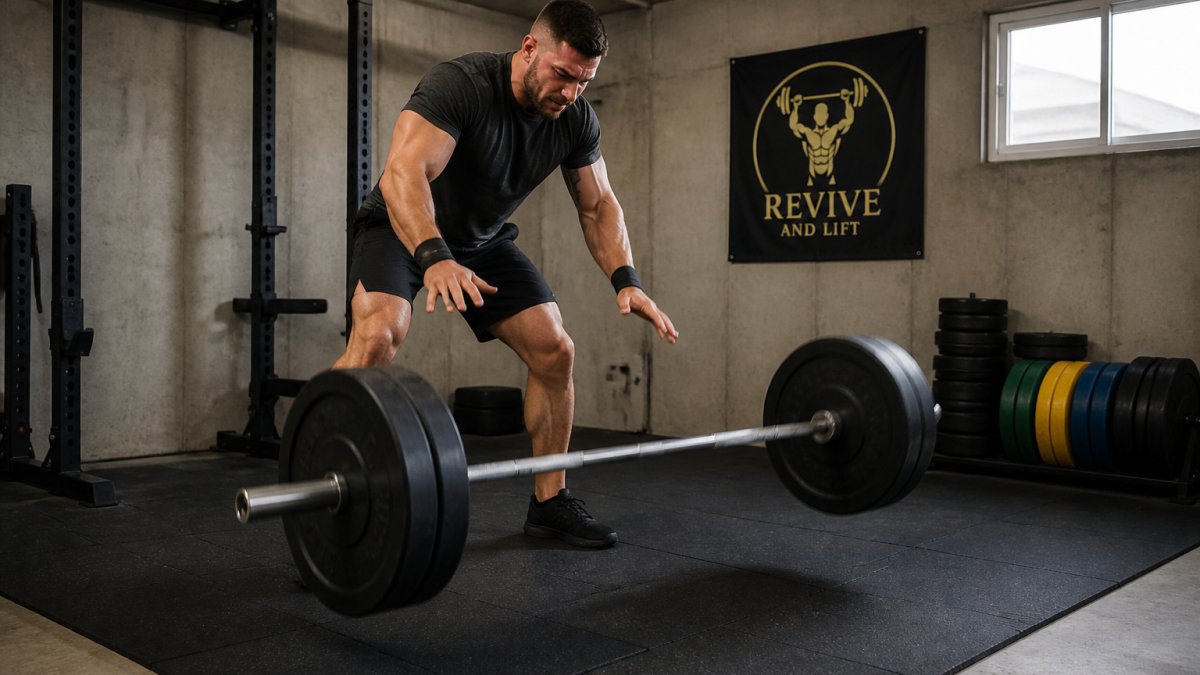
A practical way to think about it: rubber buys you a softer landing, urethane buys you a cleaner plate, and flooring buys you quiet. If you train in a shared building or a room adjacent to sleeping areas, budget for all three in that order.
Home Gym Flooring for Weights: Protecting Your Space
Floor protection is a system, not a single product. Plates and flooring work together.
Bumper plates spread impact across a wide face, which is why they protect floors far better than iron. Rubber plates add extra cushioning on the drop. Urethane plates protect the floor through a harder, more durable shell that resists the gouging that soft rubber can suffer.
Neither material replaces proper flooring. A rubber lifting platform or interlocking rubber tiles absorb the shock that would otherwise reach the slab, and they protect the plates on the rebound. For a home setup, rolled rubber flooring is the practical base layer. A product like 8mm Rolled Rubber Flooring Ecore Fit gives you a continuous surface that handles dropped weights and stays put under a rack.
Watch out: skipping flooring to save money is the most common home gym mistake. A dropped bar on bare concrete can crack the slab and shorten plate life at the same time.
Picking the Right Plates for Your Home Gym
The right choice depends on how you train, how much weight you need on the bar, and how long you plan to keep the plates. Use this framework, then check the loading math before you commit.
Start with your training style and drop frequency.
- Controlled strength training (squats, deadlifts, presses) with rare drops: either material works. Urethane's slimmer profile and cleaner finish make it the better long-term pick if the plates live in a finished room.
- Olympic lifting with frequent overhead drops (snatch, clean and jerk): rubber is the practical default. Its impact absorption and lower entry cost suit high-drop training, and the softer surface forgives imperfect landings.
- Mixed training in a shared or noise-sensitive space: rubber plus a lifting platform. Noise control matters more than plate longevity in an apartment or a room over a neighbor.
- High-use home gym where appearance and odor matter: urethane. It resists scuffing, fading, and odor, and it stays presentable in a finished space.
Then check the loading math. This is the step most buyers skip. Plate thickness determines how much weight fits on the sleeve, and rubber plates get thick at heavy weights. The TKO rubber line runs from 1.00" at 10 lb up to 3.25" at 45 lb. A standard Olympic sleeve is roughly 16" of loadable length, so a stack of thick rubber 45s eats sleeve space fast. If you plan to load heavy or run multiple plates per side, measure your sleeve and add up the thickness of the plates you intend to use. Urethane plates tend to run slimmer, which means more plates fit on the bar and the stack stores more compactly.
Then weigh total cost of ownership, not just sticker price. Urethane costs more per plate upfront, but it resists the cracking, peeling, and fading that shorten rubber's service life in high-use settings. Rubber costs less to enter and is more forgiving on impact, but it scuffs, can dry out, and may need replacement sooner under heavy drop volume. Warranty terms reflect the manufacturer's confidence: the TKO rubber bumper plates carry a 2-year breakage warranty on 25, 35, and 45 lb plates and 6 months on the 10 and 15 lb plates, while the TKO urethane grip plates carry a 5-year full commercial warranty.
Then match the plate to the room. In a tight space, handling and storage matter as much as material. Urethane grip plates often include dual grip handles or a 360-degree pickup design, which makes moving plates off the floor easier in a cramped room. Our guides on small apartment workout space ideas and a 400 sq ft home gym layout show where plates and platforms actually go. When floor space is limited, balancing plate storage with compact alternatives can make a home setup easier to manage, and Prestige Outdoor Homes connects that choice to the trade-offs between adjustable dumbbells and kettlebells.
USA Weightlifting equipment guidance notes that bumper plates are the standard for Olympic-style training because they allow safe dropping, which is why material choice matters for anyone doing snatches and cleans at home.
Frequently Asked Questions
What is the difference between rubber and urethane bumper plates?
Rubber bumper plates are made from solid virgin rubber and are built to absorb heavy impact from dropped lifts. Urethane plates use a polyurethane coating over a steel core. Rubber plates and urethane plates differ in construction, so compare the product specifications before you buy.
Are rubber bumper plates suitable for a home gym?
Yes. Rubber bumper plates are a common choice for home gyms because they protect floors during dropped lifts and cost less than urethane. TKO Rubber Bumper Plates, for example, use virgin rubber with stainless steel inserts and a uniform 450 mm diameter for consistent bar height. Pair them with a lifting platform or rubber flooring for home training.
Which bumper plates are quieter when dropped?
Noise depends on several factors, including flooring and drop height, so flooring is worth considering if you train above a neighbor.
Do urethane bumper plates last longer than rubber plates?
Plate durability depends on material, use, and handling. Check the warranty listed on each product page for coverage details.
Choosing plates is easy until you factor in the floor, the noise, and how often you actually drop the bar. That is where a plan beats a guess. Revive and Lift carries commercial-grade bumper and urethane plates from TKO, York Barbell, and Power Systems, with full manufacturer warranties, financing options, and white glove delivery and assembly available. Get started with Revive and Lift and build a home gym that holds up to the way you train.


