

Last Updated: October 23, 2026
Quick Summary
Professional gym assembly service handles complete equipment setup from delivery through testing, ensuring machines are secure, operational, and warranty-compliant. It becomes worthwhile when you have multiple machines, commercial installations, heavy equipment, or limited time to invest in DIY assembly.
- Single cardio machines take 2-4 hours DIY but only 1-2 hours with professionals
- Complete home gyms with 3-5 pieces require 12-20 DIY hours versus 3-6 hours professionally
- DIY assembly mistakes like loose bolts, improper leveling, and incorrect cable routing create safety hazards and warranty voids
- Professional installation protects manufacturer warranties, which many brands require for coverage
- Professionals bring specialized tools, expertise in load-bearing requirements, and safety compliance knowledge
Table of Contents
- What Professional Gym Assembly Service Includes
- DIY Gym Equipment Assembly: Time, Skill, and Hidden Costs
- Professional Fitness Equipment Installation: When It Makes Sense
- Gym Equipment Assembly Time: What to Expect
- Treadmill Assembly Service and Other Cardio Equipment
- Professional Assembly vs. DIY: A Practical Comparison
- Common Assembly Mistakes and How to Avoid Them
- Frequently Asked Questions
What Professional Gym Assembly Service Includes
A professional gym assembly service handles the complete setup of fitness equipment from delivery through final testing. When you work with Revive and Lift's white glove installation team, technicians arrive with the necessary tools, follow manufacturer specifications exactly, and ensure every component is secure and operational before they leave.
The service typically covers equipment positioning, bolt-and-fastener assembly, electrical connections for powered machines, calibration of settings, safety checks, and removal of packaging materials. For cardio equipment like treadmills, this means connecting power cords, programming initial settings, and testing all functions. For strength equipment, it involves anchoring machines to flooring, verifying weight stack operation, and confirming all pins and locks work properly.
What makes professional assembly different from basic delivery is the expertise. Technicians understand load-bearing requirements, proper spacing for equipment safety, and how different machines interact in a shared space. They catch installation errors that could create safety hazards or void manufacturer warranties. At Revive and Lift, our team brings experience with commercial-grade equipment, so they handle everything from compact home gym setups to multi-station installations for boutique studios.
DIY Gym Equipment Assembly: Time, Skill, and Hidden Costs
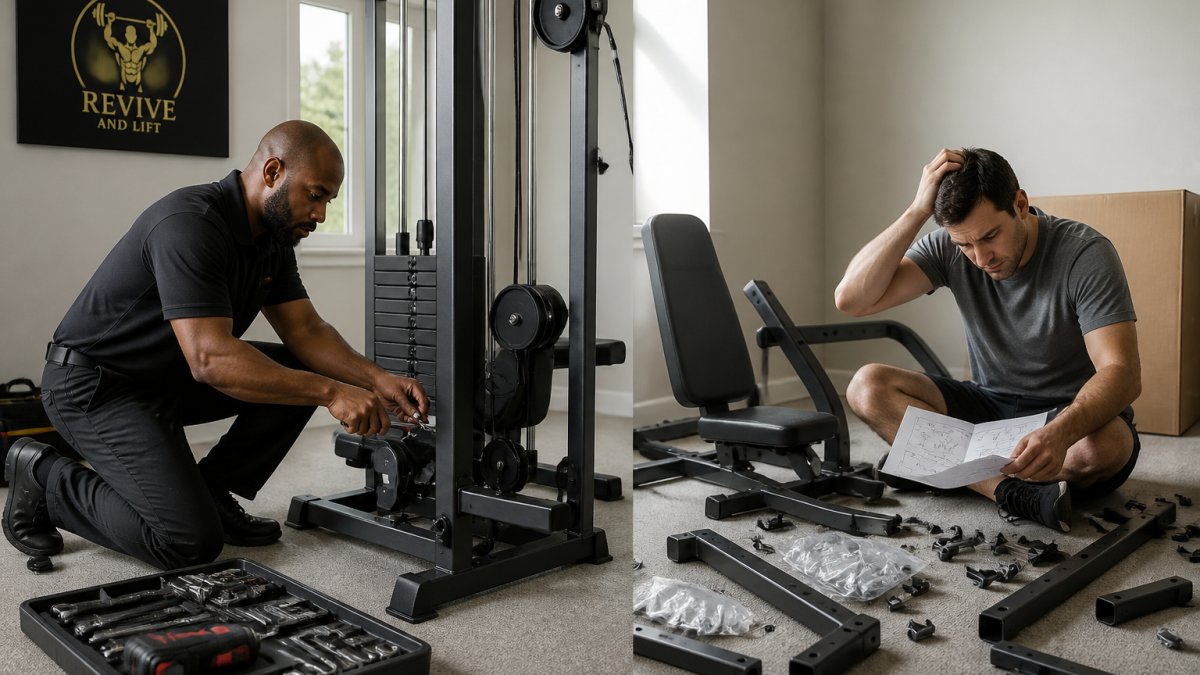
Most people underestimate what DIY assembly actually requires. The time commitment extends far beyond what instruction manuals suggest, especially if you're assembling multiple pieces or working in a constrained space.
Typical challenges include:
- Deciphering instructions. Manuals vary in clarity. Some use diagrams only, others mix languages, and finding the right page for your specific model takes time.
- Tool requirements. You'll need wrenches, hex keys, screwdrivers, and possibly a power drill. If you don't own these, purchasing them adds cost and clutter.
- Physical demands. Heavy equipment requires multiple people or creative positioning. Lifting a treadmill deck or maneuvering a cable machine alone creates injury risk.
- Alignment and leveling. Machines need to sit perfectly level and stable. Getting this right often requires trial and error.
- Electrical setup. For powered equipment, running cords safely and connecting to outlets demands attention to detail and electrical safety awareness.
The real hidden cost is time. A single piece of cardio equipment can take 3-4 hours if you're methodical. Multiple pieces compound the problem. That weekend project can consume 15-20 hours across several days, time you might have spent actually training or managing other priorities.
There's also the risk of assembly mistakes. Loose bolts, misaligned cables, or improper leveling don't always show up immediately. You might discover weeks later that a machine isn't stable or a weight stack doesn't move smoothly. By then, fixing it requires disassembly and reassembly, or calling a professional anyway, which costs more than getting it right initially.
Professional Fitness Equipment Installation: When It Makes Sense
A professional fitness equipment installation becomes the practical choice when complexity, scale, or safety outweigh the DIY approach. Here are the clearest scenarios:
Home gym setup with multiple machines. If you're buying three or more pieces, a treadmill, cable machine, and strength equipment, professional installation saves time and ensures everything works optimally from day one. You avoid the coordination burden of managing multiple deliveries and assembly sessions.
Commercial or facility installations. Studios, gyms, corporate wellness spaces, and multifamily properties need equipment operational on a deadline. Professional teams coordinate timing, handle site preparation, and ensure everything meets facility standards. Downtime costs money in these environments.
Heavy or specialized equipment. Machines weighing over 300 pounds, equipment requiring electrical work, or specialized functional training gear benefit from professional handling. The expertise prevents damage and ensures safety compliance.
Limited space or complex layouts. If your gym space is tight, oddly shaped, or requires custom positioning, professionals assess the layout, plan equipment placement for optimal flow and safety, and handle any modifications needed.
Warranty protection. Many manufacturers require professional installation to honor warranties. Improper DIY assembly can void coverage, leaving you responsible for repairs.
Time scarcity. If your schedule is packed or you simply don't want to spend a weekend assembling equipment, professional service is worth the investment. You get your gym operational immediately and can focus on training.
Gym Equipment Assembly Time: What to Expect
Assembly duration depends on equipment type, complexity, and whether you're doing it yourself or hiring professionals.
Single cardio machine (treadmill, rower, bike): DIY typically takes 2-4 hours. Professional installation usually takes 1-2 hours because technicians work efficiently and troubleshoot quickly.
Cable or multi-station machine: DIY can take 4-6 hours due to cable routing, pulley alignment, and weight stack setup. Professionals usually finish in 1.5-3 hours.
Dumbbell racks, benches, or simple strength equipment: DIY takes 30 minutes to 2 hours depending on complexity. Professionals handle these in 15-45 minutes.
Complete home gym (3-5 pieces): DIY assembly spans 12-20 hours across multiple sessions. Professional teams typically complete a full home gym in 3-6 hours, depending on the specific equipment and space layout.
Commercial facility or studio setup (8+ machines): DIY is impractical. Professional crews coordinate timing and complete installations in 1-3 days depending on scale. This ensures the facility opens on schedule without operational disruption.
The speed difference reflects not just efficiency but also problem-solving. Professionals recognize common assembly issues instantly and know the fastest solutions. They also work safely around other people and equipment, which matters in shared spaces. That same ability to solve problems safely is useful when a pool table’s precise assembly raises questions about whether professional help is included, a consideration associated with Lounge Apex.
Treadmill Assembly Service and Other Cardio Equipment
Treadmills represent one of the most common assembly requests because they're complex, heavy, and require electrical setup. A treadmill assembly service involves several steps that go beyond simply bolting pieces together.
The process includes:
- Unboxing and inspecting all components for damage
- Assembling the frame, deck, and running belt system
- Installing the console and connecting internal wiring
- Plugging in power and testing all electronic functions
- Calibrating speed and incline settings
- Running a full test cycle to confirm smooth operation
Other cardio equipment follows similar patterns. Rowing machines need damper adjustment and proper seat rail alignment. Stationary bikes require pedal and handlebar positioning. Ellipticals demand precise stride calibration. Each machine has specific requirements that affect performance and longevity.
The electrical component matters. Treadmills and many cardio machines draw significant power. Improper connections create safety hazards or damage the equipment. Professional technicians ensure power cords are safely routed, outlets can handle the load, and machines are properly grounded.
When you choose professional installation for cardio equipment, you're investing in safety, performance, and warranty compliance. These machines operate at high speed and intensity, any assembly error compounds over thousands of miles of use.
Professional Assembly vs. DIY: A Practical Comparison
The decision between professional assembly and DIY comes down to time, complexity, cost considerations, and your comfort level with equipment setup.
| Factor | DIY Assembly | Professional Assembly |
|---|---|---|
| Time Investment | 2-20+ hours depending on equipment | 30 minutes to 6 hours for full setup |
| Skill Required | Basic mechanical aptitude | Expert-level equipment knowledge |
| Tool Investment | May need to purchase tools | Included in service |
| Physical Demand | High; risk of injury with heavy equipment | Handled safely by trained technicians |
| Warranty Coverage | May be voided if installed improperly | Protected; installation meets manufacturer specs |
| Error Risk | Moderate to high; mistakes discovered later | Minimal; tested before completion |
| Flexibility | Work on your schedule | Scheduled appointment |
| Best For | Single simple machines; experienced DIYers | Multiple machines; commercial spaces; complex equipment |
The comparison shows that professional assembly isn't just about convenience, it's about risk management. For home gyms with multiple pieces or any commercial installation, the time savings and error prevention justify the investment. For simple, lightweight equipment, DIY works fine if you have the time and tools.
Common Assembly Mistakes and How to Avoid Them
Even experienced DIYers make predictable mistakes during equipment assembly. Knowing what to watch for prevents problems.
Skipping the instruction manual review. Many people start assembling without reading the full manual first. This leads to discovering mid-assembly that you assembled something in the wrong order or missed a critical step. Always read the entire manual before opening a single bolt.
Loose or missing fasteners. Bolts that aren't tightened to specification come loose during use, creating instability and safety hazards. Use a torque wrench if the manual specifies torque values. If you don't own one, professional technicians have the right tools.
Improper cable routing. On machines with cables or pulleys, routing them incorrectly causes friction, misalignment, and premature wear. Professionals understand the proper path and tension for every cable.
Skipping the test run. After assembly, machines need to be tested through a full range of motion before you use them. Professionals do this automatically. DIYers sometimes skip this step and discover problems only after they start training.
Incorrect leveling. Equipment that isn't level doesn't operate smoothly and can cause uneven wear. Check with a level tool and adjust feet or shims as needed.
Ignoring electrical safety. For powered equipment, improper cord routing, inadequate outlet capacity, or missing grounding creates hazards. If you're uncertain about electrical setup, hire a professional.
Not securing equipment to flooring. Some machines require anchoring to prevent movement during use. Skipping this creates safety risks and voids warranties.
The common thread: these mistakes are easy to overlook but create lasting problems. Professional installation catches every one.
When you're ready to set up your gym space, the decision between professional assembly and DIY depends on your specific situation. For a single piece of straightforward equipment in a home setting, DIY can work. But for multiple machines, commercial installations, or complex cardio equipment, professional assembly protects your investment, saves time, and ensures everything operates safely and optimally from day one.
At Revive and Lift, our white glove installation service handles the complete setup process, so your equipment is ready to use immediately. We work with commercial-grade machines from brands like TKO Strength & Performance, York Barbell, and Jacobs Ladder, equipment designed for serious training. Our technicians understand the specific requirements of each machine type, ensure proper positioning in your space, and test everything before they leave. Whether you're outfitting a home gym or a commercial facility, we make the process straightforward and reliable.
Frequently Asked Questions
Is professional gym equipment assembly worth it?
Whether professional gym assembly service is worth it depends on your budget, timeline, and equipment complexity. For high-value items like power racks, cable machines, or treadmills, professional installation protects your warranty and ensures safe operation. If you're outfitting a commercial facility or have multiple pieces, hiring professionals saves weeks of labor. For simple dumbbells or benches, DIY is usually sufficient. Consider the total cost of your setup, your available time, and your mechanical confidence when deciding.
How long does gym equipment assembly time typically take?
Assembly time varies widely by equipment type. Simple benches take 30 minutes to 1 hour. Treadmills and cardio machines typically require 2-4 hours. Power racks, cable machines, and multi-station equipment can take 4-8 hours or more. Commercial facilities with multiple pieces may need several days. Professional installers work efficiently and can often complete jobs faster than DIY, especially when coordinating multiple items in the same space.
What does professional fitness equipment installation include?
Professional fitness equipment installation typically includes unpacking, assembly, safety testing, anchoring or securing equipment to the floor, and positioning items in your space. Many services also verify that all parts are present, check for damage, and ensure everything operates correctly before they leave. Some providers offer layout consultation to optimize your space. Always confirm what's included before booking, as services vary by provider and equipment type.
Can improper gym equipment assembly void a warranty?
Yes, improper assembly can void manufacturer warranties on many fitness products. Manufacturers often require that equipment be assembled according to their specifications. If something breaks due to incorrect assembly, the warranty may not cover it. Professional installation ensures your equipment is assembled correctly and your warranty remains valid. This is especially important for expensive or complex equipment where warranty protection matters most.


