

Table of Contents
- What Gym Equipment Installation Services Near Me Actually Include
- How Much Do Fitness Equipment Assembly Costs Add Up To?
- Commercial Gym Equipment Setup: What Changes at Scale
- DIY vs. Professional Installation: What You Risk
- Your Gym Equipment Maintenance Checklist After Install
- How to Vet an Installation Provider
- Frequently Asked Questions
Last Updated: September 25, 2026
What Gym Equipment Installation Services Near Me Actually Include
Gym equipment installation services near me searches usually spike right after a treadmill or weight bench arrives in three heavy boxes. This guide from Revive and Lift breaks down what a professional visit actually covers, what it costs, and where DIY goes wrong.
What a Standard Installation Visit Covers
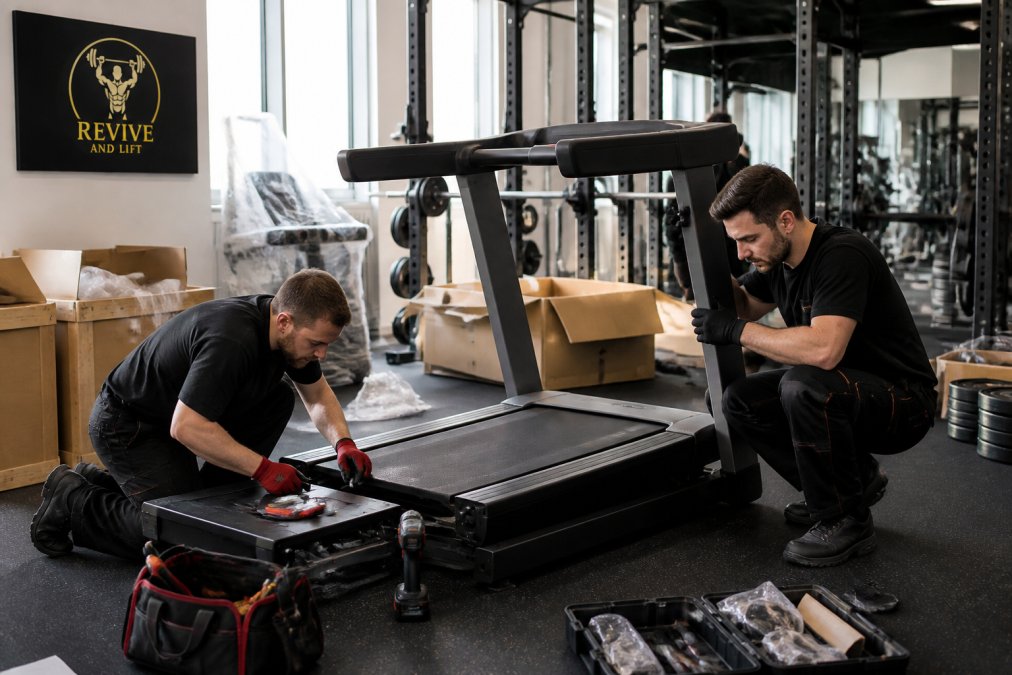
A standard visit handles more than bolting parts together. Technicians unbox and stage the machine, assemble the frame and moving components, level the unit on uneven flooring, calibrate resistance and incline systems, and run a safety inspection before they leave.
When You Need More Than Basic Assembly
Basic assembly stops at "it's put together." Some jobs need more:
- Multi-gym systems and functional trainers with cable crossovers
- Commercial-grade machines that require bolt-down to the floor
- Equipment needing dedicated electrical circuits
- Facility relocations where machines must be disassembled and re-installed
How Much Do Fitness Equipment Assembly Costs Add Up To?
Fitness equipment assembly cost depends on three things: machine type, whether haul-away is included, and whether the unit needs anchoring or electrical work. Most providers quote either a fixed rate per machine or an hourly labor rate with a minimum. Understanding what drives each quote helps you compare apples to apples.
The Three Pricing Models You'll Encounter
Flat rate per machine. The provider quotes a set price based on the equipment category. A stationary bike might fall into a "basic cardio" tier, while a multi-gym falls into a "complex strength" tier. This model works well when the scope is predictable.
What Drives the Price Up or Down
| Factor | Lower Cost | Higher Cost |
|---|---|---|
| Equipment type | Stationary bike, elliptical | Multi-gym, commercial treadmill |
| Access | Ground-floor, wide doorway | Stairs, tight turns, elevator limits |
| Anchoring | None required | Bolt-down to concrete |
| Electrical | Standard outlet | New dedicated circuit |
| Disposal | You keep the packaging | Haul away services included |
| Technician count | One tech, simple build | Two techs, heavy lift or complex cable routing |
| Timing | Flexible weekday | After-hours or weekend |
Why the Cheapest Quote Usually Costs More
The lowest quote often excludes haul-away, leaves packaging behind, or sends one technician to a job that needs two. A single tech attempting a commercial treadmill alone risks injury and improper leveling. Ask what's included in writing before you book. A cheap quote that skips calibration leaves you paying twice, once for the install and again for the repair.
How to Estimate Your Own Job
Count the machines, note the heaviest piece, check your doorway and stair dimensions, and confirm whether any unit needs a dedicated circuit. A provider who asks these questions before quoting is more likely to give you an accurate number. A provider who quotes without asking is guessing, and you'll pay for that guess later.
Commercial Gym Equipment Setup: What Changes at Scale
Commercial gym equipment setup is a project, not an appointment. A single home treadmill takes an afternoon. Outfitting a facility with dozens of machines takes scheduling, staging space, and coordination with other trades.
Flooring Goes In First
Rubber flooring goes down before any machine arrives. For interlocking systems, products like the 8mm Rubber Interlocking Tiles from Ecore Fit install tile by tile and allow individual replacement later. Rolled options such as 9mm Rolled Rubber Flooring cover large cardio floors faster.

Electrical, Anchoring, and ADA Access
Commercial cardio machines often need dedicated circuits, so confirm power before delivery day. Strength equipment in public facilities should be anchored to prevent tipping. And any change in floor height needs a transition: Athletic Flooring ADA Ramps create compliant, trip-resistant edges between flooring surfaces.

DIY vs. Professional Installation: What You Risk
DIY saves the labor line on your invoice and costs you time, tools, and sometimes your warranty. But not every job carries the same risk. Some equipment is genuinely safe to assemble at home. Other machines require professional installation for safety, warranty, and performance reasons. Here's how to tell the difference.
The DIY Risk Assessment: When It's Safe vs. When It's Not
Safe to DIY with basic tools:
- Flat benches and simple weight benches
- Dumbbell racks and storage trees
- Basic stationary bikes with no electronics
- Floor mats and flooring tiles
Proceed with caution, DIY possible but risky:
- Ellipticals with flywheel assemblies
- Mid-range treadmills with folding mechanisms
- Cable machines with simple pulley systems
Professional installation strongly recommended or required:
- Commercial-grade treadmills (heavy, require calibration)
- Multi-gym systems and functional trainers with cable crossovers
- Any equipment requiring bolt-down to concrete
- Machines needing dedicated electrical circuits
- Equipment where the manufacturer specifies authorized assembly
The Warranty Clause Most People Miss
Many manufacturers require assembly by a qualified technician or authorized dealer to keep the warranty valid. A dropped bolt or a stripped thread from a home install can turn a covered repair into a paid one. Read the warranty terms before the boxes arrive, not after something breaks.
Equipment-Specific Setup Requirements
Every machine type has its own quirks:
- Treadmills: belt tension, deck lubrication, incline calibration, console wiring
- Ellipticals: flywheel alignment, pedal arm torque, resistance mechanism timing
- Weight benches: frame leveling, pad bolt torque, stability under load
- Multi-gym systems: cable tension, pulley alignment, anchor points, cable routing through frame
- Power racks: floor anchoring, upright leveling, J-hook and safety arm placement
The Hidden Costs of Getting It Wrong
A mis-leveled treadmill wears the belt unevenly and can void the drive motor warranty within the first year. An improperly anchored multi-gym can tip under load. A cable machine with misrouted cables can snap under tension. These aren't hypothetical, they're the most common repair calls technicians receive.
When to Call a Professional
If your equipment weighs more than you can safely lift with a partner, requires anchoring to the floor, needs a dedicated electrical circuit, or carries a warranty that specifies professional assembly, call a professional. The cost of installation is almost always less than the cost of repair, injury, or a voided warranty.
Your Gym Equipment Maintenance Checklist After Install
A gym equipment maintenance checklist starts the day installation ends. Preventative maintenance is what separates equipment that lasts a decade from equipment that needs repair in year two.
Weekly, Monthly, and Annual Tasks
- Weekly: Wipe down upholstery, inspect cables for fraying, check belt tracking on cardio machines
- Monthly: Torque frame bolts, lubricate treadmill decks, test emergency stop functions
- Quarterly: Deep-clean flooring, inspect power cords, check anchor points
- Annually: Full safety inspection, replace worn belts and cables, re-calibrate resistance systems
A preventative maintenance plan costs far less than emergency on-site repair, especially for commercial fitness equipment in constant use.
How to Vet an Installation Provider
Ask three questions before you book: Are you insured? Do you carry manufacturer authorization for these brands? What happens if a bolt strips during assembly?
Frequently Asked Questions
How much does it cost to install home gym equipment?
Fitness equipment assembly cost depends on the machine type, how many pieces you're installing, and whether you need haul-away or relocation. Simple items like weight benches take less time than multi-gym systems or treadmills. Most providers quote either a fixed rate per machine or an hourly labor rate, so ask for a written service quote that itemizes each piece. If you buy through Revive and Lift, white glove delivery and assembly is available nationwide, which bundles freight and setup into one service.
Do gym equipment installation services include leveling and safety checks?
A thorough installation includes leveling and stability checks, bolt-down services for machines that need floor anchoring, and a basic safety inspection of cables, belts, and fasteners. Equipment calibration matters most on cardio machines and cable systems, where an unbalanced unit wears faster and feels wrong under load. Ask the provider to confirm in writing that leveling and a post-install safety check are part of the visit, not an add-on.
Is professional installation required to keep my manufacturer warranty?
Many manufacturers require assembly by a qualified technician or authorized dealer to keep the warranty valid. If you assemble a heavy machine yourself and a weld or frame component fails, the claim can be denied on the grounds of improper installation. Buying through an authorized dealer like Revive and Lift means your equipment comes with full manufacturer warranties and access to professional assembly, so the paperwork lines up if you ever need to file a claim.
Can I get old equipment hauled away when new equipment is installed?
Haul away services are commonly offered alongside installation, though not every provider includes them by default. Ask before you book. Removal is worth arranging at the same time as delivery because the crew is already on site with the right equipment, and it avoids paying for two separate visits. For commercial spaces, confirm whether the provider handles equipment disposal and recycling or just removal to the curb.
The hardest part of a gym build isn't choosing equipment. It's getting heavy machines assembled, leveled, and verified so they're safe from day one. Revive and Lift pairs a hand-selected catalog with nationwide white glove delivery and assembly, full manufacturer warranties, and financing options through Affirm and Shop Pay. Get started with Revive and Lift and set up a training space that's ready to use the day it arrives.


