

Last Updated: October 25, 2026
Quick Summary
Essential strength equipment for boutique gyms is a short list of pieces that let a small floor support programmed strength classes, personal training, and open member use without crowding the room or the budget. Build that list around how many people train at once, what the class formats demand, and how hard the gear gets used.
- Count your largest class, add two stations for overflow and drop-ins, and buy to that number.
- In a dumbbell press class, every member needs a bench, so a class of 12 needs 12 benches.
- Plan for two bells per member in a swing or clean block so nobody waits mid-interval.
- The Commercial Half Rack with Storage System pairs 3x3 commercial-grade steel uprights with an integrated storage bay.
- Tape your layout on the floor with painter's tape and run a mock class before you order.
Table of Contents
- What Boutique Gyms Actually Need on the Strength Floor
- Quick Comparison: 7 Strength Equipment Picks for Boutique Gyms
- 1. Commercial Half Rack with Storage System: The Space-Saving Anchor
- 2. Multi-Adjustable Weight Bench: One Bench, Every Angle
- 3. Rubber Hex Dumbbell Set: The Backbone of Any Small Gym Equipment List
- 4. Olympic Rubber Grip Plate Set with Power Bar: Barbell Training Made Simple
- 5. Elite Kettlebells and Racks: Functional Training Equipment for Gyms
- 6. Selectorized Duals Lat Pulldown Seated Row: Two Machines in One Footprint
- Gym Equipment Layout Ideas That Keep a Small Floor Workable
- Frequently Asked Questions
What Boutique Gyms Actually Need on the Strength Floor
Essential strength equipment for boutique gyms is the short list of pieces that let a small floor support programmed strength classes, personal training, and open member use without crowding the room or the budget.
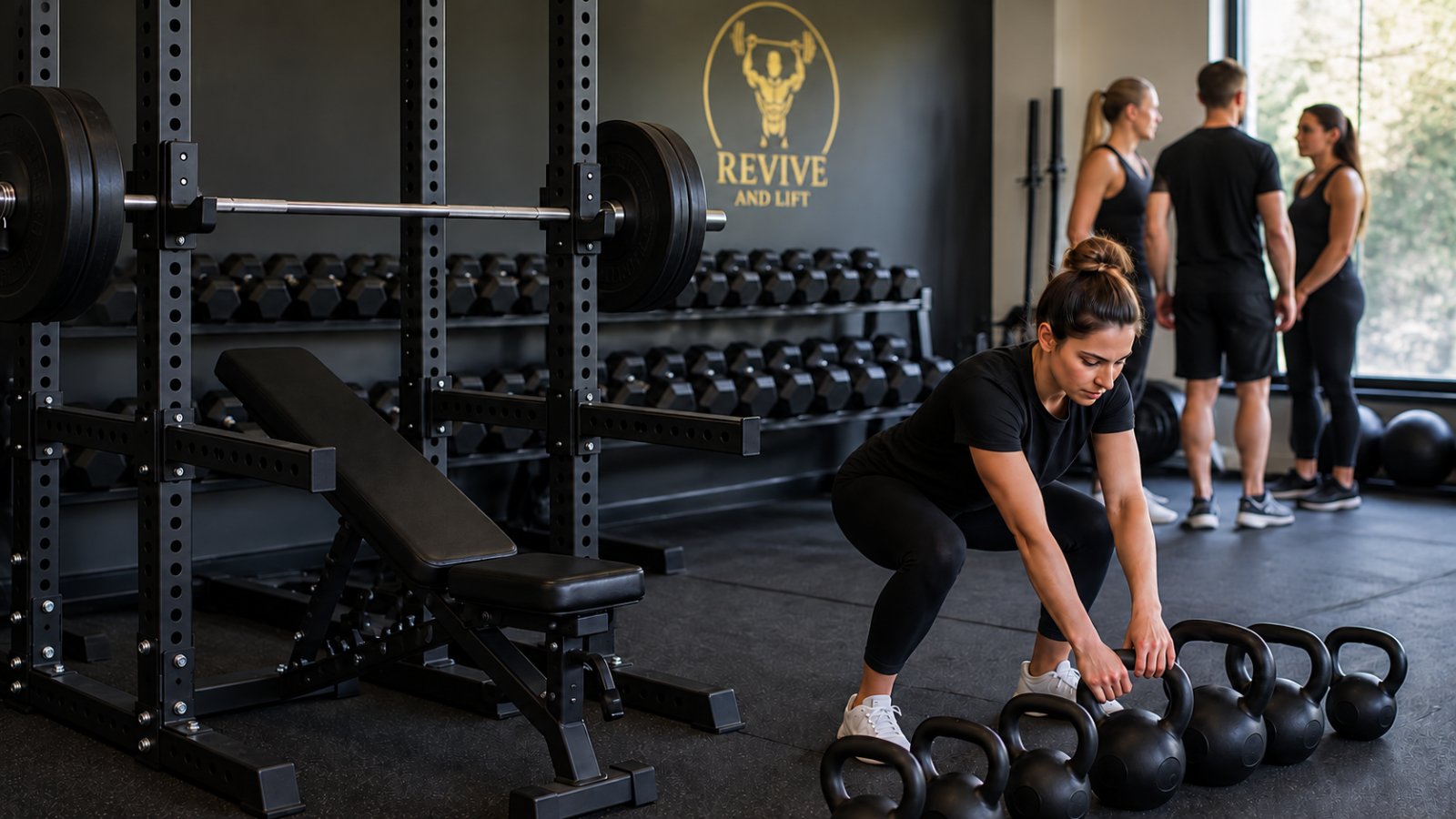
Start with capacity. The American Council on Exercise guide to strength training is a useful reference for matching equipment to movement patterns rather than to aesthetics.
Finally, plan storage into the footprint. Racks with integrated shelves, plate horns, and tiered kettlebell storage keep the floor clear and cut setup time between classes.
Quick Comparison: 7 Strength Equipment Picks for Boutique Gyms
Use this table as a starting point, not a shopping list. The right quantity of each piece depends on your largest class size, your class formats, and how hard the gear gets used; the notes below explain how to translate each pick into a quantity.
Pick |
Price |
Best For |
Footprint Note |
Plan Quantity By |
|---|---|---|---|---|
Commercial Half Rack with Storage |
$4,436.00 |
Squat and press stations |
Storage built into the rack |
One per 2-3 lifters in a barbell block |
Multi-Adjustable Weight Bench |
$880.00 |
Pressing and rowing |
Wheels for quick repositioning |
One per athlete in a bench block |
Rubber Hex Dumbbell Set, 5-50 lb |
$1,200.00 |
Full-body dumbbell work |
Racks sold separately |
One set per 8-12 members training at once |
Olympic Plate Set with Power Bar |
$1,057.00 |
Barbell lifting |
Needs floor protection |
One per rack, plus a shared plate cache |
Elite Kettlebells and Rack |
From $20.00 each |
Functional and HIIT classes |
Rack holds 12 bells |
Two bells per member in a swing block |
Selectorized Lat Pulldown Seated Row |
$3,120.00 |
Upper-body pulling |
Two movements, one machine |
One per 6-8 members in a pull block |
How to turn picks into quantities
Capacity planning is the step most equipment lists skip. Count your largest class, add two stations for overflow and drop-ins, then check the ratio for each piece:
- Benches: in a dumbbell press class, every member needs a bench. If your largest class is 12, you need 12 benches, not four.
- Racks: barbell blocks usually run in waves of two to three lifters per rack. A class of 12 with a squat block needs four to six racks, or a rotating format that keeps the same rack busy.
- Dumbbells and kettlebells: plan for two bells per member in a swing or clean block so nobody waits mid-interval. A 12-person class needs 24 bells in the working weight range, which is why a 12-bell rack is a starting point, not a full solution.
Durability, maintenance, and warranty planning
Boutique gyms put equipment through far more cycles per week than a home gym. Look for commercial-rated frames, replaceable upholstery, and warranties that cover daily use. The Commercial Half Rack carries 3x3 commercial-grade steel uprights, the Multi-Adjustable Weight Bench carries a 10-year frame and 5-year parts warranty, and the Selectorized Duals machine carries a 10-year frame warranty and cables rated to 2,000 lbs breaking strength.
Build a simple maintenance calendar around the pieces you buy:
- Weekly: inspect cables, J-cups, and safety arms for wear; tighten bench hardware.
- Monthly: check upholstery seams and replace pads showing cracks before they tear.
- Quarterly: inspect plate coatings and kettlebell handles for chips that can cut hands.
Total cost of ownership
The sticker price is only part of the budget. Plan for delivery, installation, flooring under heavy pieces, replacement upholstery, and a reserve for worn cables and lost collars.
1. Commercial Half Rack with Storage System: The Space-Saving Anchor
Laser-cut upright numbering lets a coach set bar height fast between athletes. Polyurethane-lined J-cups and safety arms protect bars and cut noise.
Watch out: the assembled frame runs 65 by 120 inches, so measure your ceiling and clear zone before it ships, not after.
View the Commercial Half Rack with Storage System

Best for: studios running coached squat and press blocks. Skip if: your floor plan has no room for a fixed station.
2. Multi-Adjustable Weight Bench: One Bench, Every Angle
Transport wheels and a front handle matter more than they sound. In a studio where the floor resets between sessions, one person can move four benches in under a minute.
The frame carries a 10-year warranty and parts a 5-year warranty, which tells you what the manufacturer expects from daily commercial use.
See the Signature Series Multi-Adjustable Weight Bench

Best for: dumbbell-focused classes and personal training. Skip if: you only program machine-based circuits.
3. Rubber Hex Dumbbell Set: The Backbone of Any Small Gym Equipment List
Any small gym equipment list starts with dumbbells, and a 5-50 lb set in 5-lb increments covers most group programming.
The hex heads stop the rolling that plagues round dumbbells in tight rows.
Watch out: storage racks are sold separately, so budget for them or plan shelf space inside your half rack.
Shop the York Barbell 5-50LB Rubber Hex Dumbbell Set

Best for: studios running circuit and hypertrophy classes. Skip if: your members are advanced lifters needing above 50 lbs.
4. Olympic Rubber Grip Plate Set with Power Bar: Barbell Training Made Simple
Barbell work needs a bar that survives drops and plates that survive the bar.
Dual-grip plate handles make loading safer for newer members, and the rubber coating keeps noise down in shared buildings.
Pair it with drop pads if your floor sits above a neighbor. The Occupational Safety and Health Administration guidance on workplace safety is worth a read if your facility is inside a corporate or residential building where floor protection and safe lifting zones matter.
View the Olympic Rubber Grip Plate Set with Power Bar
Commercial Half Rack with Storage System | TKO →
Best for: studios teaching foundational barbell lifts. Skip if: you have no coach on the floor to supervise loading.
5. Elite Kettlebells and Racks: Functional Training Equipment for Gyms
Power Systems Elite Kettlebells come in 13 weights from 5 to 70 lbs, with molded weight markings on the top and sides so selection takes a glance.
The matte nickel-plated handle resists smudging and stays secure during high-rep swings. Textured rubber protects floors and rack shelves.
Storage matters as much as the bells.
Watch out: the rack arrives partly disassembled, so schedule assembly before your first class, not the morning of.
Best for: HIIT, conditioning, and small-group functional classes. Skip if: your programming is strictly barbell-based.
6. Selectorized Duals Lat Pulldown Seated Row: Two Machines in One Footprint
Two movements, one machine, one footprint. The TKO 8801 combines a lat pulldown and a seated row in a single selectorized unit, exactly the trade a boutique floor should make when square footage is the constraint.
The five-position seat and multi-position thigh pads fit many member sizes. The extended seat supports proper rowing mechanics. A fully shrouded weight stack keeps resistance changes fast and quiet.
The frame carries a 10-year warranty.
Explore the Selectorized Duals Lat Pulldown Seated Row
Best for: studios that want machine-based pulling without two stations. Skip if: your members are advanced rowers who need heavier stacks on day one.
Gym Equipment Layout Ideas That Keep a Small Floor Workable
Layout is where an equipment list either becomes a working strength floor or a pile of expensive obstacles. The goal is not to fit the most pieces into the room; it is to move a full class through a programmed workout without collisions, bottlenecks, or wasted setup time. Three planning numbers drive every layout decision: clear working zone per athlete, transition distance between stations, and storage reach.
Start with working zones, not equipment footprints
A squat or press station needs more than the rack's base. Plan a clear zone of roughly 6 by 8 feet per lifter for barbell work, including bar path, loading room, and a step-back area.
Measure the room, subtract door swings, egress paths, and any required clearance around electrical panels, then divide what is left by your per-athlete zone. That number, not the equipment catalog, tells you your true class capacity.
Use a three-zone floor plan
A layout that holds up under real class traffic usually separates the floor into three zones:
- Anchor zone: fixed pieces such as the half rack and the selectorized dual machine, placed against a wall or structural column so they do not block sightlines.
- Mobile zone: benches, dumbbells, kettlebells, and medicine balls that get moved or picked up every class, kept on the opposite wall or on a central island so members can reach them in two steps.
- Open zone: clear turf or rubber space for carries, sleds, and bodyweight work that doubles as the transition lane between stations.
Keep noisy, high-impact work on rubber flooring away from coaching stations and doorways. Put the half rack and bench zone on one wall, dumbbells and kettlebells on the opposite wall, and leave a walking lane at least 4 feet wide between them so a member carrying a pair of 40 lb dumbbells never has to weave through a line of people.
Plan storage into the footprint, not beside it
Storage is the most commonly underestimated layout cost. Every piece that gets picked up needs a home reachable in two steps from where it gets used. Racks with integrated shelves, plate horns, and tiered kettlebell storage keep the floor clear and cut setup time between classes.
A 12-bell kettlebell rack in a 31 by 23 inch footprint, like the Studio Kettlebell Rack, is another space-efficient anchor.
Design transitions, not just stations
A boutique class lives or dies on transitions. Walk your planned circuit with a stopwatch before you buy anything: if a member needs more than about 15 seconds to move from the rack to the bench to the dumbbell rack, the layout will produce bottlenecks in a full class.
For strength training equipment for small spaces, everything that gets picked up should be reachable in two steps from where it gets used, and every station should have a clear path to the next one.
If you are outfitting a corporate or multifamily space, our team can help plan quantities and layouts before you order. Talk to us about planning a commercial equipment purchase
Frequently Asked Questions
What strength equipment is essential for a small gym?
Start with the pieces that support the most exercises per square foot: a half rack with integrated storage, one multi-adjustable bench, a full dumbbell set, an Olympic plate set with a power bar, and a range of kettlebells. Add a selectorized dual machine such as a lat pulldown and seated row combo, and finish with rubber flooring and drop pads. That mix covers squats, presses, pulls, hinges and carries for most members without filling the floor with single-purpose machines.
How much space do I need for strength equipment in a boutique gym?
Plan around the working room each piece needs, not just its footprint. A half rack with storage measures 65 inches long by 120 inches wide by 96 inches high, and you still need clear space in front for loading and spotting. Benches need room to slide back for incline work, and dumbbell racks need a walkway wide enough for two people to pass. Map your floor with painter's tape before ordering so you can see how members will move between stations during a class.
What is the difference between commercial and home gym equipment?
Commercial equipment is built for repeated daily use by many people. Look for heavier steel, higher weight ratings and warranties that cover facility use. The TKO half rack uses 3x3 commercial-grade steel uprights with a 10-year frame warranty, and the TKO plate set includes a bar rated to 1,000 pounds with a 5-year commercial plate warranty. Home gear may look similar but often carries lighter frames and warranties that void under commercial use, which matters when 50 members train on it every day.
How can a boutique gym make strength equipment work for different fitness levels?
Choose adjustable and incremental options. A multi-adjustable bench with a 9-position back pad and 4-position seat pad fits tall and short members alike, while selectorized machines let beginners change resistance with a pin. Dumbbells in 5-pound increments and kettlebells from 5 to 70 pounds let new members progress without jumping too far. Pair that with coaching cues on each station so members know how to scale an exercise up or down.
Fitting a full strength program into a small floor is a planning problem, not a shopping problem. Revive and Lift carries commercial-grade equipment from TKO, Power Systems, and Anatomy Fitness, with financing options, nationwide white glove delivery and assembly, and support sourcing items that are not listed online. Get started with Revive and Lift and build a strength floor that fits your space and your classes.


